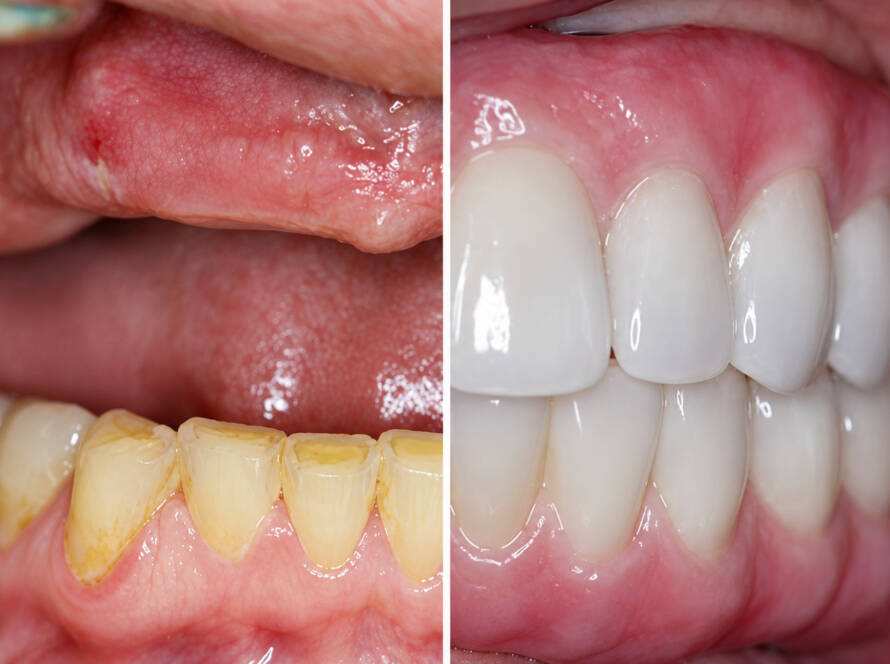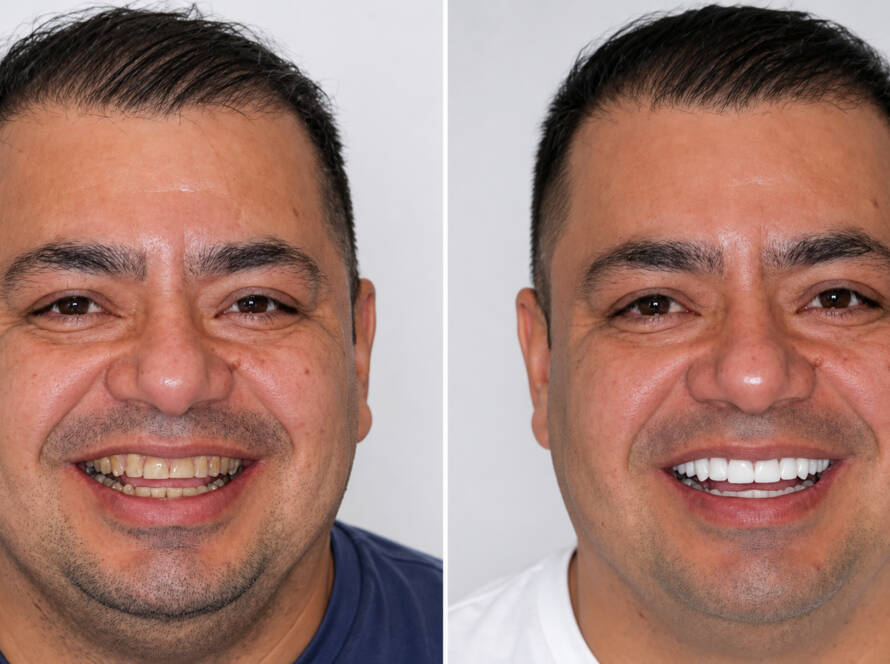

A patient who dislikes the appearance of their smile might ask about veneers. Another patient may want to replace several missing teeth, repair damaged restorations, and improve their ability to chew. Both patients want a better smile, but their dental needs are not necessarily the same.
This is one reason the terms smile makeover and full mouth reconstruction can create confusion. Both may involve crowns, veneers, or other restorative procedures. Both can change the appearance of a patient’s teeth. However, the reasons for treatment, the level of planning involved, and the underlying dental problems can be very different.
Understanding that distinction can help patients ask better questions before committing to treatment.
What Is a Smile Makeover?
A smile makeover generally refers to a combination of dental treatments intended primarily to improve the appearance of a person’s smile.
Depending on the individual, concerns may involve tooth color, shape, alignment, spacing, or proportions.
Common treatment options include professional teeth whitening, porcelain or composite veneers, cosmetic bonding, orthodontic treatment, and, in appropriate cases, dental crowns.
For example, someone with healthy teeth and gums who dislikes discoloration or minor differences in tooth shape might benefit from relatively conservative esthetic procedures.
However, cosmetic treatment is not automatically simple or risk-free.
Porcelain veneers, for instance, usually require the removal of some enamel and are not considered reversible. They also need maintenance and may eventually require repair or replacement.
The American Dental Association emphasizes that existing dental problems, such as tooth decay or gum disease, should be addressed before veneers are placed.
A responsible smile makeover begins with an evaluation of oral health, not merely the selection of a preferred shade or tooth shape.
What Is Full Mouth Reconstruction?
Full mouth reconstruction is generally considered when dental problems extend beyond appearance and affect the overall health, structure, or function of the mouth.
Patients may have multiple missing teeth, failing restorations, severe wear, extensive decay, or other conditions that require coordinated treatment.
The objective is not simply to create a visually attractive smile. It is to rebuild or replace damaged and missing teeth in a way that considers chewing function, bite relationships, comfort, oral health, and long-term maintenance.
Depending on the findings, treatment may involve crowns, bridges, implants, removable prostheses, periodontal care, orthodontics, or other procedures.
These treatments are selected as part of an individualized rehabilitation plan.
The Main Difference: Esthetic Improvement vs. Comprehensive Rehabilitation
The distinction is not always about which dental materials are used. It is primarily about why treatment is needed.
Consider two hypothetical situations.
Patient A: Healthy teeth with cosmetic concerns
A patient has healthy gums, a stable bite, and no significant dental damage. However, they feel uncomfortable with discoloration and minor differences in the appearance of their front teeth.
Their dentist may recommend whitening, bonding, orthodontic treatment, or veneers, depending on the clinical findings.
The primary goal is esthetic improvement.
Patient B: Multiple functional and structural problems
Another patient has several missing teeth, heavily restored molars, worn front teeth, and difficulty chewing comfortably.
Changing the appearance of the front teeth alone would not necessarily resolve the underlying problems.
This patient may require a broader evaluation, including the condition of the remaining teeth, the supporting tissues, and the way the upper and lower teeth function together.
The primary goal is comprehensive rehabilitation, with appearance considered as an important part of the overall result.
These examples illustrate different treatment needs, but an examination is necessary to determine which approach is appropriate for any individual.
Can a Smile Makeover and Full Mouth Reconstruction Overlap?
Absolutely.
Restorative dentistry and cosmetic dentistry are closely connected. A crown can strengthen a damaged tooth while improving its appearance. Orthodontic treatment may improve alignment, esthetics, and the conditions needed for restorative work.
Similarly, full mouth reconstruction often involves important esthetic decisions. Tooth proportions, smile line, color, and the relationship between the teeth and facial features can all influence the treatment plan.
The difference is that extensive rehabilitation must also address the underlying dental conditions and the functional requirements of the restorations.
A beautiful result is important, but appearance alone does not establish whether a treatment is clinically appropriate.
Why the Bite Matters
The way the upper and lower teeth contact each other is called the occlusion.
When several teeth are missing, severely worn, or structurally compromised, the existing bite may complicate restorative treatment.
Restorations must be planned with attention to the forces they will experience during chewing and other jaw movements.
For patients who grind or clench their teeth, the causes of tooth wear and the risks to future restorations also need consideration. A protective appliance may be recommended for selected patients.
Not every patient with a cosmetic concern has a bite problem. Conversely, not every bite problem requires extensive reconstruction.
What matters is identifying the conditions that are actually present rather than assuming they exist based on appearance.
Does Full Mouth Reconstruction Always Require Dental Implants?
No.
Dental implants can be valuable for replacing missing teeth, but they are not automatically necessary for every patient undergoing extensive rehabilitation.
Some patients retain enough healthy natural teeth to support crowns or other restorative treatments. Others may benefit from bridges or removable prostheses.
Implant treatment also involves considerations such as bone availability, medical conditions, healing, maintenance, and the patient’s preferences.
A comprehensive treatment plan should explain the reasonable alternatives, including their benefits, limitations, costs, and maintenance needs.
The decision should be based on clinical indications rather than the popularity of any particular procedure.
When Should You Consult a Prosthodontist?
A prosthodontist has specialized training in restoring and replacing teeth, including the planning of complex restorative cases.
Patients may benefit from this expertise when their dental concerns involve multiple teeth, extensive existing restorations, tooth wear, missing teeth, or uncertainty about the best combination of procedures.
Consulting a prosthodontist does not mean that every case will require full mouth reconstruction.
Sometimes the most appropriate recommendation is a more limited treatment plan.
The important part is receiving an evaluation that considers the whole mouth before deciding how much treatment is necessary.
Choosing the Right Treatment Starts with the Right Diagnosis
When comparing a smile makeover with full mouth reconstruction, the better question is not which treatment produces the most dramatic transformation.
It is whether the proposed procedures address the patient’s actual dental needs.
For someone with healthy teeth seeking cosmetic improvements, an extensive restorative approach may be unnecessary. For someone with widespread dental damage, cosmetic treatment alone may leave important functional problems unresolved.
A careful examination, a discussion of alternatives, and realistic expectations provide a stronger foundation for making that decision.
Explore Your Restorative Treatment Options
Dr. Gabriel Sader, DDS, is a prosthodontist and founder of The Dental Studio in Spring, Texas. To discuss complex restorative concerns or explore available treatment options, contact The Dental Studio to request a consultation or call (713) 598-0727.
This content is provided for general educational purposes and should not be used as a substitute for an individual dental evaluation.