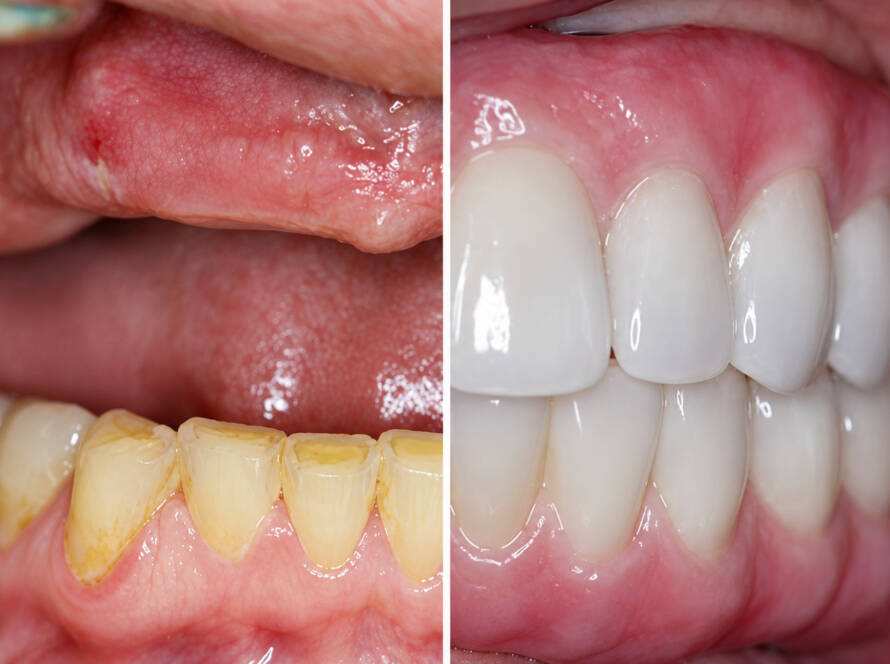

When patients begin exploring full mouth reconstruction, one of their first questions is usually how long the entire process will take.
It’s an understandable concern. Extensive dental treatment can affect work schedules, travel plans, eating habits, and daily routines. Patients want to know when treatment will begin, how many appointments they might need, and when they can expect to receive their final restorations.
The answer depends on what needs to be treated.
Some restorative plans can be completed over several appointments within a relatively short period. Others involve multiple stages over several months or longer, especially when dental implants, bone grafting, periodontal treatment, or extensive healing are required.
Understanding the different stages can make the process easier to plan.
Why Full Mouth Reconstruction Doesn’t Have a Standard Timeline
Full mouth reconstruction is not a single dental procedure. It is a comprehensive treatment approach that may combine different restorative and surgical procedures.
A patient who needs several crowns on otherwise healthy teeth has very different requirements from someone who has lost most of their teeth and needs implant-supported restorations.
The treatment sequence may also be influenced by the condition of the gums, the amount of available bone, the presence of infections, and the patient’s overall health.
For this reason, a reliable timeline should only be established after an appropriate clinical evaluation.
It is useful to distinguish between three separate milestones: the time required to complete active treatment, the time needed for tissues to heal, and the point at which definitive restorations can be delivered.
These milestones do not always occur at the same time.
Stage 1: Comprehensive Examination and Treatment Planning
Before beginning major restorative work, the dentist needs to understand the patient’s existing oral condition.
An initial evaluation may include a detailed examination, dental radiographs, photographs, digital scans or impressions, an assessment of gum health, and an evaluation of the bite.
For patients considering dental implants, three-dimensional imaging may be recommended to assess bone anatomy and assist with surgical planning.
The dentist must also review the patient’s medical history and determine whether additional consultations or specialist assessments are necessary.
The planning stage helps establish which teeth can be preserved, whether surgical procedures are needed, and how treatment should be sequenced.
In complex cases, it may involve more than one appointment.
Although patients may be eager to begin treatment immediately, careful planning is especially important when several restorations need to function together.
Stage 2: Treating Existing Dental Problems
Some patients require preparatory treatment before their final restorations can be placed.
This may include treating decay, addressing periodontal disease, performing necessary root canal treatment, or extracting teeth that cannot reasonably be preserved.
When infections or significant inflammation are present, these conditions need to be managed as part of the overall plan.
The timing of this stage varies considerably.
A patient with healthy supporting tissues and a few damaged restorations may need relatively little preparatory work. Another patient may require several procedures and healing periods before proceeding.
The objective is to establish a healthier and more predictable foundation for the definitive restorative treatment.
Stage 3: Restoring Teeth or Placing Dental Implants
The next stage depends on the selected treatment approach.
When natural teeth can be retained, restoration may involve crowns, onlays, bridges, or other prosthetic solutions.
These procedures generally involve preparation of the teeth, recording their shape and position, fabrication of the restorations, and careful evaluation of their fit and bite.
More extensive restorative plans may require provisional restorations to help evaluate appearance, comfort, and function before the final prostheses are completed.
For patients who need dental implants, the process can be more involved.
How Long Does Dental Implant Healing Take?
Dental implants must establish a stable connection with the surrounding jawbone. This biological process is known as osseointegration.
According to Cleveland Clinic, osseointegration can take approximately three to nine months, depending on individual healing and clinical circumstances.
However, that does not mean every patient must wait that entire period without replacement teeth.
Some patients may be candidates for immediate provisional restorations, while others require a staged approach.
The appropriate method depends on factors such as implant stability, bone conditions, the design of the restoration, and the forces expected during function.
In patients who require bone grafting or additional surgical procedures, the overall treatment timeline may be longer.
Can You Get New Teeth in One Day?
The phrase teeth in a day is frequently associated with full-arch implant treatment, including certain All-on-4 protocols.
In selected cases, implants can be placed and a provisional restoration attached during the same treatment day.
However, there is an important distinction between receiving provisional teeth and completing the entire rehabilitation.
Even when a fixed provisional restoration is provided immediately, the underlying implants still require biological healing, and the patient needs appropriate follow-up care.
The final restoration may be fabricated and delivered at a later stage after the implants and surrounding tissues have been evaluated.
Not everyone is a candidate for immediate loading, and it should not be assumed that a specific timeline is possible without a clinical assessment.
The American Dental Association recognizes that some patients may receive replacement teeth during the same visit as implant placement, while others need to wait for implant integration.
Stage 4: Provisional Restorations and Adjustments
Temporary or provisional restorations can play an important role in extensive rehabilitation.
Depending on the treatment, they may allow patients to maintain an acceptable appearance and some chewing function while healing takes place or final prostheses are being manufactured.
They may also help the dental team evaluate aspects of the proposed restoration, such as tooth shape, bite relationships, speech, and comfort.
Adjustments may be needed during this period.
Provisional restorations also have limitations. Patients may need to follow specific dietary recommendations, avoid excessive chewing forces, and attend regular follow-up appointments.
Not every full mouth reconstruction requires the same type of provisional restoration. The dentist should explain what will be used, how long it is expected to remain in place, and how to care for it.
Stage 5: Final Restorations and Long-Term Maintenance
Once the necessary clinical and healing conditions have been met, definitive restorations can be completed.
These may include individual crowns, fixed bridges, implant-supported prostheses, or other restorative solutions.
Final delivery involves checking the fit, appearance, bite, patient comfort, and ability to maintain adequate hygiene.
Even after the restorations are delivered, treatment is not necessarily finished from a long-term care perspective.
Natural teeth, implants, and prosthetic restorations all require appropriate maintenance.
Depending on the patient’s needs, this may include regular professional examinations, cleaning around restorations, monitoring of implants, and management of habits such as tooth grinding.
The American College of Prosthodontists emphasizes the importance of ongoing professional maintenance for full-arch implant-supported restorations.
What Can Make Full Mouth Reconstruction Take Longer?
Several factors can influence the overall treatment timeline.
The number and condition of the teeth involved. Treating a few damaged teeth is different from rehabilitating both dental arches.
Gum and bone health. Active periodontal problems or insufficient bone may require additional treatment.
The need for dental implants. Implant placement can introduce healing periods that are not necessary for tooth-supported restorations.
Medical conditions and medications. Certain health conditions and treatments may influence surgical planning, healing, and the suitability of different procedures.
The complexity of the bite. Extensive wear or complex bite relationships may require additional diagnostic work and provisional adjustments.
Healing and follow-up findings. The treatment plan may need to be modified if tissues heal differently than expected or if additional problems are discovered.
These factors explain why advertised treatment timelines cannot replace an individualized assessment.
What Should You Ask Before Starting Treatment?
Patients considering extensive rehabilitation should understand not only the final treatment objective but also the process required to reach it.
Useful questions include:
- How many stages are expected in my treatment plan?
- Will I need dental implants or additional surgery?
- Will temporary teeth be provided?
- What eating restrictions should I expect?
- How many appointments will be necessary?
- What factors could change the timeline?
- What maintenance will be required after treatment?
Patients should also receive a clear explanation of the proposed alternatives, limitations, potential complications, and anticipated costs.
A treatment plan is easier to understand when expectations are discussed before the procedures begin.
The Right Timeline Is the One Your Treatment Requires
Full mouth reconstruction can be a significant undertaking, but it should not be viewed as a race toward the final restoration.
Some patients may complete treatment over several weeks. Others may require months of staged care, particularly when surgical procedures and implant healing are involved.
Neither timeline automatically indicates a better result.
What matters is allowing enough time for appropriate diagnosis, treatment, healing, restoration, and follow-up.
A carefully coordinated plan helps patients understand what is being done, why each stage is necessary, and what they can realistically expect along the way.
Take the First Step Toward a Personalized Treatment Plan
Dr. Gabriel Sader, DDS, is a prosthodontist and founder of The Dental Studio in Spring, Texas. If you are considering full mouth reconstruction and want to understand your options, request a consultation through The Dental Studio or call (713) 598-0727.
This article provides general educational information. Treatment recommendations and timelines must be established through an individual clinical evaluation.